Showing posts with label storyboarding. Show all posts

Monday, October 26, 2015

Form Ever Follows Function


My tardiness in writing a well-thought out newsletter was delayed due to book* & presentation projects earlier this month.

I've been leading an Art Deco skyscrapers walking tour,  primarily along LaSalle Street in Chicago,  since I 'certified' in late spring. Art Deco is about ornamentation, these magnificent 1930s skyscrapers got me thinking about structure and the use of ornament (decoration).

Below is a quote excerpt from Holabird & Roche, architects of Chicago Board of Trade (1930):
"the exterior is an expression of the function(s) of the building..."
I think they were tapping into Louis H. Sullivan's "form ever follows function." For the CBOT, many would agree, the ornamentation is not merely decoration; it accentuating the overall design of the commodities exchange–all relating to agriculture (wheat, corn, lumber).

Why the architecture metaphor?
Frankly, there are numerous metaphors beyond architecture.
Each project, even an image for your Instagram feed requires structure and planning. We must invest the time into purpose or function, before any discussion of ornamentation. Then the mechanics of structure structure and flow of the publication will designed. Every writer I know begins with an outline or structure. Yes, even graphic designers begin with function and structure.

No amount of stock images, cheeky infographics or trendy color swatches will hide the lack of thought given to crafting a strong message and story structure; including any call-to-actions.

Working with photographic material presents a different opportunity to create a theme or visual structure for a collection. (see previous post)

I can't tell you how many times, I've been asked to work on pitch deck/publication and the first conversation is about the aesthetics versus purpose, theme, content and audience.

Let's not design from the outside inward. Sticky notes, index cards or whiteboards are simple, yet effective tools to breakdown your storyboard, eliminating the non-essential, shifting sections to improve the flow, etc.

More about structure or storyboarding:
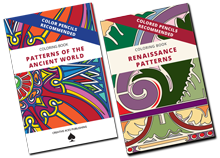


Break out your coloring pencils to ignite your inner creative juices–coloring is the new meditation. Patterns of the Ancient World and Renaissance Patterns were developed for convenience of travel. The 6x9" size is ideal to toss in your shoulder bag and fits nicely on hard surface like your tablet. AND, I included blank pages for your own drawings or doodles. Available via Amazon.

Joann

Monday, April 20, 2015

Storyboarding, Not Just for Filmmakers

The following is part of a running series of posts, from Create Your Own Great Photo Book; the first "Be a Ruthless Photo Editor" covers activities you can use to take control of your image library.

Storyboarding, Not Just for Filmmakers

How do you organize your images? Stay true to your theme.

Developing a structure based on your time is the foundation to create your own great photo book. And, keep you focused. It can be overwhelming when you're confronted with a volume of images. Refer to my previous post, Be A Ruthless Photo Editor, to eliminate the unnecessary, poor quality and non-relevant images.


A screen shot of one folder.
Example: My Family Archive. On a rainy Sunday afternoon, I decided to make a dent in scanning the negatives and photographs––which I have two or three large Rubbermaid storage tubs––from my family's photo archive. I pulled out an armful of 'stuff' and began sorting the pieces. Tossing items that had little relevance to the long-term integrity of the archive, poor quality and extremely damaged. Things like out-of-focus shots, unrecognizable subjects, generic birthday & holiday cards, etc. The result, spending time on quality pieces that would convey the story of my family.

Stay Grounded to Your Theme

As mentioned above, developing a structure will serve as your foundation. Using images and text creates your visual story. Most stories are typical: a beginning, middle and end. Let's take this further.

Tapping into a more sophisticated organization can add more interest to your photo book. Try one or a combination of the following:


4 types of story organization to add interest to your photo book.

Storyboarding your content gives you a 'roadmap' to a finish product. Naturally, we want to be flexible as the project progress. Image sequencing and storyboarding is time well spent!

After you've experimented with your visual storyboarding with your first photo book, it will become easier the next time. Eventually, challenging your creativity to try new concepts.

Interested in more? Download "Create Your Own Great Photo Book."

Next: Add cognitive flow within your theme.


Happy self publishing.